
The CUAS Convergence Gap: When Cyber and Physical Drone Risks Collide, Latency Wins

Most organisations will tell you they manage cyber and physical risk holistically. The 2026 reality on the ground is usually quite different. If you audit your own escalation paths honestly, you'll probably find two parallel silos: separate budgets, separate tools, separate chains of command.
That fragmentation is no longer an organisational inconvenience: it is a measurable liability. As infrastructure becomes increasingly software-defined and operations shift toward remote management, the gap between physical and digital events is closing fast.
When these risks collide, the organisation that cannot bridge the gap loses to the most dangerous adversary of all: latency.
How CUAS Threats and Cyber Anomalies Scale Damage in the Void of Latency
The reason for this shift is straightforward. Physical and digital events no longer arrive as separate problems. They converge into a single operational incident expressed through multiple signals across different domains. In the "void" between a CUAS alert and a network anomaly being detected, the incident matures.
If the two teams are not sharing a common operating picture, they are forced to mentally stitch together fragments under extreme time pressure. For the operator, that friction is not really about missing tools. Instead, it is the absence of a coherent operational narrative that everyone can act on.
This is where damage scales. When detection is fragmented, verification slows; when verification slows, the whole response coordination degrades. Consider how this plays out in your own building.
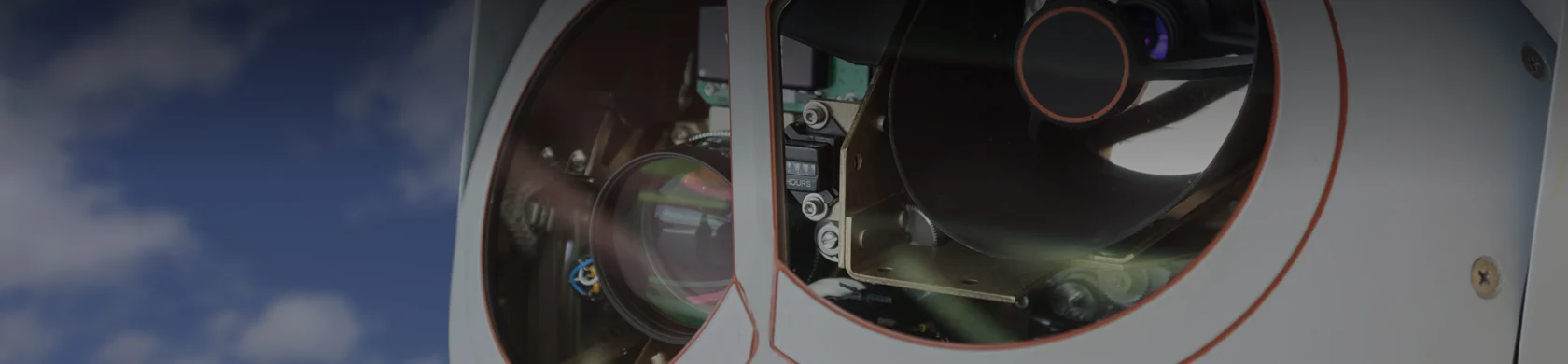
A drone is spotted near a data centre, and the security desk logs it as a perimeter issue. Forty minutes later, the IT team independently detects unusual outbound traffic.
Two teams, two tickets, one incident, and nobody connected them while it still mattered. In this environment, counter-drone signals for infrastructure resilience must be treated as a primary input. They must feed directly into the wider security forensic chain.
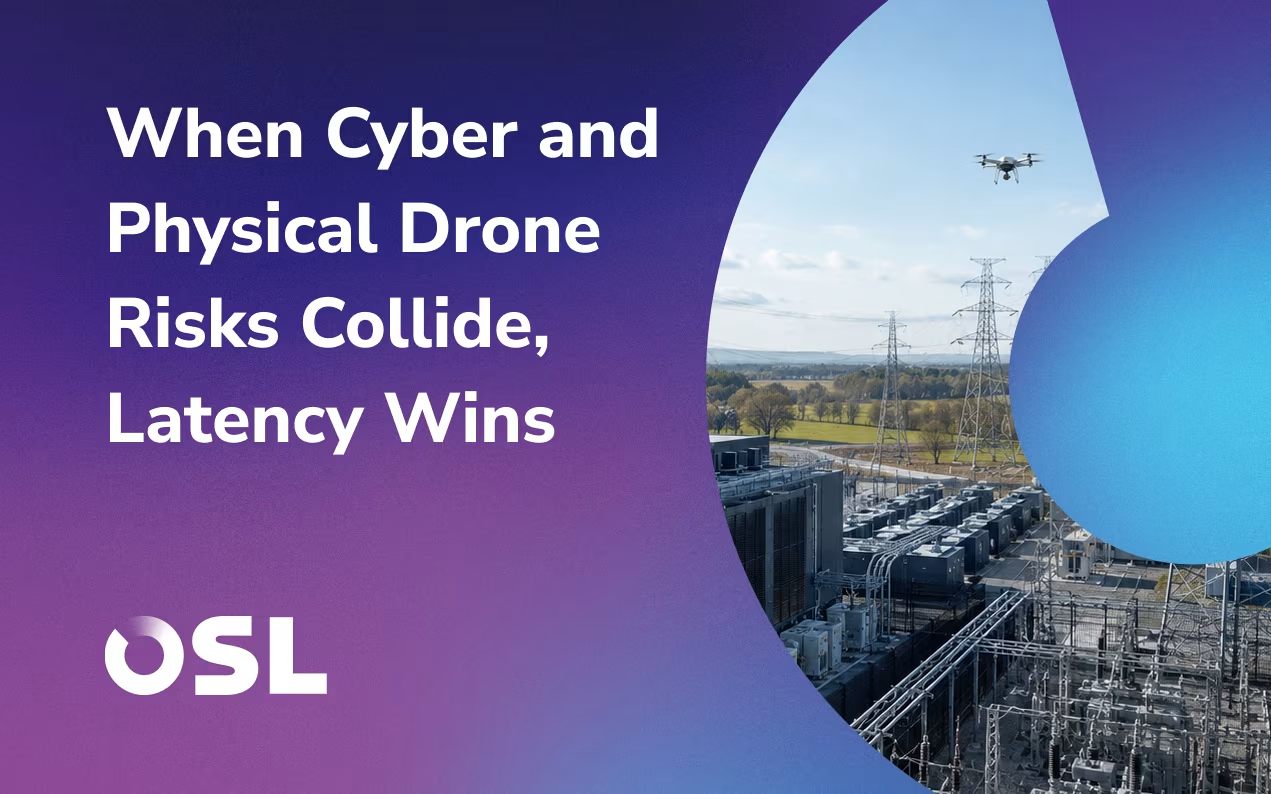
A drone loitering near a data centre or a substation is rarely a simple physical trespass. In 2026, it's often a mobile signal-intelligence platform or the physical delivery vector for a localised cyber-attack.
Europe has felt this directly. ENISA's Threat Landscape reporting consistently shows hybrid, multi-vector incidents rising against critical sectors, which is precisely why integrated detection has become a NIS2-era expectation rather than a nice-to-have. The cost of getting this wrong is not theoretical. It's measured in regulatory exposure, downtime, and the erosion of public confidence.
Transitioning to Autonomy-Driven Counter Drone Frameworks
To close this gap, the industry is pivoting toward autonomy-driven counter-drone frameworks. The goal is not to replace your decision-makers but to give them machine-speed data fusion. In a crisis, the system should automatically correlate a physical detection with potential digital triggers on the perimeter network, so that one alert informs the other instead of arriving in isolation.
This automation strips out the trivial work of data collection and processing, allowing the OODA loop (Observe, Orient, Decide, Act) to be vastly accelerated. When the system automatically prioritises threats and suggests where to allocate mitigation resources, the convergence gap begins to close.
Picture a substation control room at 02:00: an RF sensor flags an unfamiliar drone signature on the eastern boundary, at the same moment, the SOC sees lateral probing on a maintenance VLAN.
Handled separately, those are two ambiguous tickets. Fused, they are one coherent story your duty manager can act on immediately. Without that integration, your security team stays reactive, always one step behind a threat moving at the speed of software.
The Imperative of Sovereign Counter Drone Strategic Autonomy
The requirement for sovereign counter-drone strategic autonomy has never been higher. When a critical site is under hybrid attack, you cannot afford to depend on "black-box" systems with opaque data sovereignty or foreign-controlled update cycles.
Relying on external, non-sovereign technology creates a structural vulnerability. It can introduce potential back-doors or “kill switches” that could be exploited during geopolitical tension. Your security is only ever as strong as its most vulnerable dependency.
This is why anchoring technology within a local R&D counter drone ecosystem is a strategic necessity, not a procurement preference. By developing the underlying algorithms and data fusion platforms within a controlled, sovereign environment, European nations ensure their defence posture is as secure as the infrastructure it protects.
OSL embodies this model: a British CUAS specialist, part of the Terma Group, engineering its fusion and analytics capability within a sovereign industrial base. The benefit for you is concrete. Your data stays where it belongs, and decisions remain with authorised personnel rather than an opaque supplier.
Convergence as an Operational Outcome for CUAS-Ready Sites
Airports again offer the clearest example. A digital interruption that degrades passenger processing often coincides with CUAS events designed to distract security personnel or probe terminal access.
Picture your duty manager during peak-hour departures. A check-in outage unfolds on one screen while a drone sighting appears on another. If your security team owns one screen and operations owns the other, that friction is a gift to the adversary. That is the convergence gap in practice, and it is rarely solved by buying another sensor.
Convergence has to be an operational outcome, not a slogan. It requires one operating picture, one response model, and one defensible narrative. Platforms must automatically correlate inputs across air, surface, and perimeter domains, with AI focused on classification and prioritisation rather than blind autonomy. This is the design philosophy behind OSL's layered, integrated CUAS systems.
In 2026, the only way to defeat latency is to connect your security systems like the threats targeting them. The focus must shift from point-solution security to a unified, mission-critical workflow.
Frequently Asked Questions: Counter Drone Strategic Signals
What is the CUAS convergence gap?
Dangerous delays emerge when drone threats and cyber incidents are handled by separate teams using separate tools. The incident matures in the "void" between the two alerts, before anyone assembles a complete picture.
Why do CUAS and cyber incidents now arrive together?
As infrastructure becomes software-defined, a drone is rarely just a physical trespass. It can act as a mobile signal-intelligence platform, or as the delivery vector for a localised cyber-attack. As a result, air and network signals increasingly belong to the same incident.
How does remote operational monitoring improve CUAS response latency?
Remote operational monitoring compresses the time between detection, verification, and escalation. Instead of forcing on-site personnel to manually interpret sensor outputs under pressure, dedicated operators assess telemetry and flight behaviour in real time. It allows response decisions to be made faster and with greater confidence.
What is sovereign counter-drone strategic autonomy?
It means your CUAS algorithms, data fusion, and update cycles should operate within a controlled, sovereign environment. They should not depend on foreign-controlled back doors or “kill switches” that could be exploited during geopolitical tension.
How do autonomy-driven counter-drone frameworks accelerate response?
They automate sensor correlation and threat prioritisation, compressing the OODA loop. Operators stop manually stitching fragments together and instead act on a single, fused operating picture at machine speed.
How does a sovereign counter-drone ecosystem support integrated cyber-physical security operations?
It enables drone alerts, network anomalies, and perimeter activity to feed into a shared operating picture. Security teams can then treat hybrid incidents as one coordinated event rather than managing disconnected physical and cyber alerts separately.
Editor's Pick
.avif)
Secure your airspace with adaptive drone defence solutions
Ensure operational safety with multi-layered solutions designed to counter unauthorised drones and protect complex environments.