
The High Price of "Cheap" Sensors: A 15 Year Financial Reality
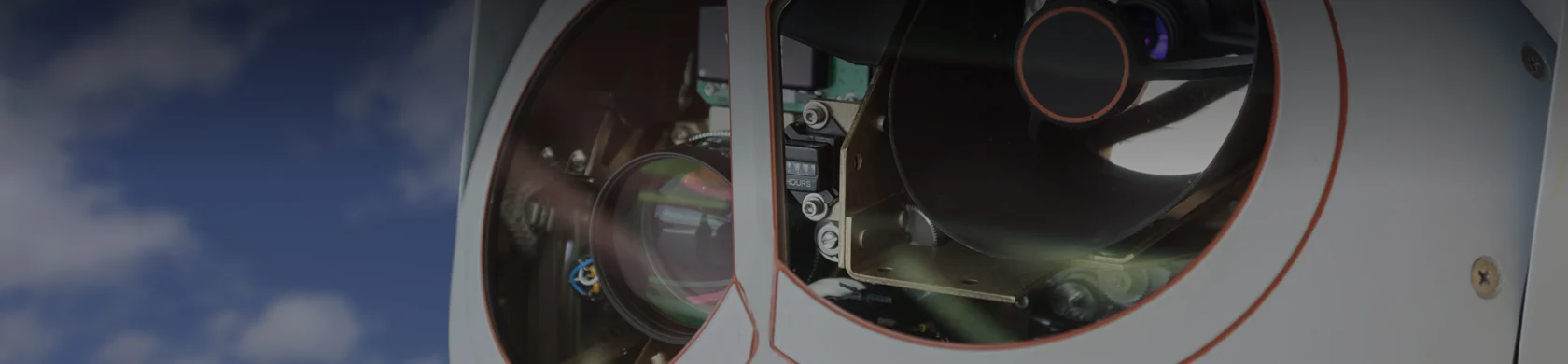

%201.avif)
The financial logic behind a 15-year strategic defence framework, such as the one currently being debated by the Belgian MoD, is frequently misunderstood at the initial procurement stage. There is a persistent, almost magnetic temptation to look at the price at the gate as the primary metric for success. In a boardroom, a low initial CAPEX figure looks like a quick win for the budget.
But on the frontline, that bargain sensor often becomes a massive operational headache within the first twenty-four months. By 2026, we are seeing the fallout of budget-first thinking across the European defence sector: the high price of cheap sensors.
When you are responsible for the engineering depth for drone protection at a high-value site, cheap is not a saving. It is a long-term liability that drains your budget and your human resources year after year.
To get a real handle on the numbers, we have to move beyond the sticker price and perform a rigorous counter-drone TCO analysis. Over a 15-year period, the initial purchase price of a sensor represents perhaps 20% of the total investment. The other 80% is where the counter-drone TCO's hidden costs live.
These costs are found in the maintenance gap, the constant need for manual recalibration, and the eventual early replacement of hardware that simply was not built to survive a decade of constant use. If you are not looking at the lifecycle-based counter drone TCO from day one, you are setting yourself up for a financial "cliff" five years down the road.
The Maintenance Trap and the Reality of Remote Sites
Cheap sensors are rarely designed with the ruggedisation required for persistent surveillance in a zero-fail environment. Whether you are dealing with the corrosive salt-spray of a naval port or the high-vibration environment of a transportable military unit, low-cost hardware tends to fail at the worst possible times.
This creates a maintenance gap that is often ignored in initial sales proposals. If a sensor fails at a remote offshore wind farm, the cost of the hardware itself is the least of your worries. The real costs are the specialised vessel, the weather-dependent deployment of a technical team, and the hours or days of lost protection while the site remains vulnerable.
This is why remote C-UAS monitoring is the future of the industry. It relies on high-fidelity, reliability-driven counter-drone engineering that minimises the need for physical intervention. A premium system is an investment in counter-drone sensor operational uptime.
When you choose hardware with a proven counter-drone sensor radar pedigree, such as the Terma SCANTER radar series, you are investing in reliability. It brings a decade of predictable, consistent performance. You are choosing a system that was engineered to survive the North Sea, not a sensor designed for a parking lot.
The "Ghost" in the Machine: Why Cheap Data is Expensive
The most damaging hidden cost of a cheap sensor is not found in a repair bill: it is found in the noise it produces. Low-tier sensors struggle to filter out environmental clutter: birds, heavy rain, or even moving trees. Every one of these ghost detections triggers an alert. In a high-security environment, every alert demands a response.
This leads to Operator Fatigue, a genuine security risk that can lead to catastrophic lapses in national defence. If your security team has to chase 50 false alarms every shift, they will eventually stop trusting the system. When a real, non-collaborative threat actually appears, it may be dismissed as just another false alarm.
This is where depth-driven counter-drone situational awareness becomes a safety requirement rather than a luxury. By investing in counter-drone engineering depth at the start, you ensure that your detection chain is high-confidence. You are not just buying a sensor: you are buying back the time and focus of your security personnel.
As noted in recent International Energy Agency (IEA) reports on energy security, the ability to maintain mission continuity without being paralysed by false data is the single biggest factor in long-term operational success for strategic assets.
When you are protecting a national asset for over a decade, engineering depth is a requirement, not a luxury. A sensor that drains your operator's attention with ghost detections is an operational failure. We build for the long term, conducting a lifecycle-based counter-drone TCO that ensures the system remains an asset to the mission rather than a burden on the taxpayer. Reliability is the only true economy in this business. It starts with meeting the most rigorous counter-drone engineering requirements.
Strategic Autonomy and the Industrial Anchor
The Belgian strategic framework correctly identifies the need for a Belgian Industrial Anchor. This is not just a political goal: it is a financial one. A cheap, foreign-made sensor often comes with a shallow support network.
If the hardware fails or needs a software update to counter a new "out-of-library" threat, you depend on the vendor’s priorities. That is a dangerous place to be when national defence is on the line.
A premium partnership establishes a local ecosystem. It means having a local helpdesk, local production facilities, and an R&D path that is directly influenced by the user’s specific counter-drone engineering requirements.
This ensures that your counter-drone TCO for asset protection remains stable. You are not buying a disposable product. Instead, you are buying a living defensive asset that can be updated and improved as the threat landscape shifts.
The Final Word on Lifecycle Value
Ultimately, the choice comes down to a simple question: Are you buying for the next quarter or the next decade? A lifecycle-based counter-drone TCO proves that the lowest bid is rarely the most cost-effective over a 15-year window. By prioritising counter-drone sensor reliability and a proven radar pedigree, organisations can eliminate the counter-drone TCO hidden costs that plague budget-first deployments.
In the 2026 security environment, "good enough" is a vulnerability. True resilience is built on the back of engineering depth and a disciplined approach to long-term value. For those charged with protecting the nation’s most sensitive infrastructure, the lowest bid is a risk that is simply too expensive to take.
We must move toward a model that focuses on the total lifecycle and the predictable certainty of protection. By prioritising the uptime of counter-drone sensors, we ensure national strategic autonomy remains more than a boardroom talking point.
FAQs: Counter Drone Sensor Reliability
How does long-term firmware evolution affect system interoperability with other C-UAS platforms?
Continuous firmware updates can introduce protocol or timing shifts that disrupt multi-vendor integration. Active management and version control are essential to ensure new releases don’t break cross-system detection or workflows.
What are the risks of sensor signal degradation over multi-year deployments in high-EMI environments?
Persistent electromagnetic interference can shift calibration baselines and reduce detection sensitivity. Without routine benchmarking and high-value sites risk subtle blind spots, even when the sensor remains physically operational.
How does the choice of radar waveform affect the detection of emerging non-cooperative UAVs?
Waveform design determines the ability to resolve small RCS targets and differentiate them from clutter. Legacy waveforms may underperform against low-signature drones, underscoring the need for adaptable waveform architectures for long-term efficacy.
Editor's Pick

Secure your airspace with adaptive drone defence solutions
Ensure operational safety with multi-layered solutions designed to counter unauthorised drones and protect complex environments.