
The New Critical Sites: Drone Security for Data Centres, Pharma and an Expanding Threat Map


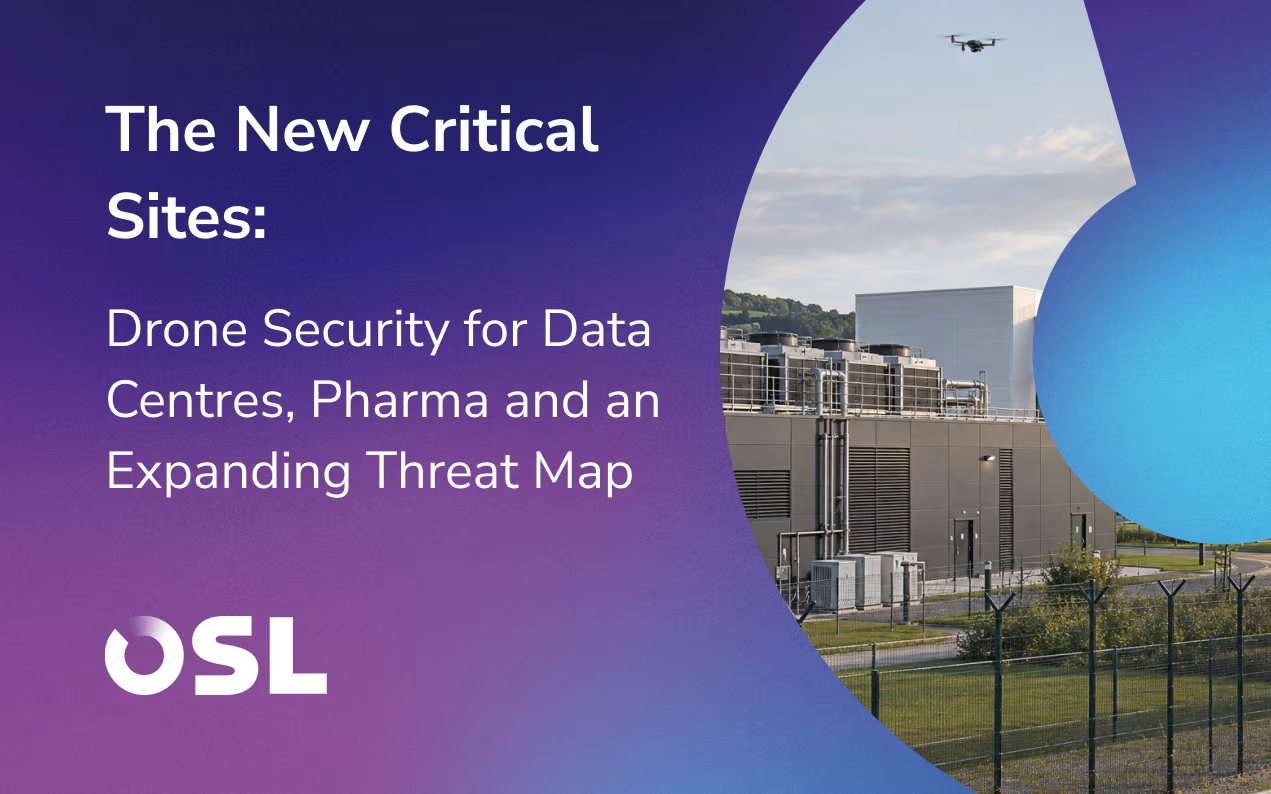
Until this year, drone security for data centres sounded like a niche concern. Then, on 1 March 2026, Iranian Shahed drones struck two commercial data centres in the United Arab Emirates, and a third in Bahrain was hit. It was the first time a country had deliberately targeted commercial data centres in wartime, and the disruption spread to the local banking system.
In October, far from any war zone, port workers at Eemshaven in the Netherlands reported unidentified drones on several nights over an area that houses LNG terminals, power plants and data centres. The police are investigating, and no one has been identified.
Two very different events, one shared lesson: the map of what counts as critical is being redrawn, and data centres and pharmaceutical sites are now on it.
Why Data Centres and Pharma Are Now Critical Sites
Data centres have become the infrastructure behind almost everything else: government services, banking, logistics and, increasingly, the AI compute that nations treat as a strategic asset. The UK designated data centres as Critical National Infrastructure in September 2024.
The EU's Critical Entities Resilience (CER) Directive lists data centre service providers among the entities member states must protect, and Germany's KRITIS umbrella act, which brings it into national law, came into force in March 2026.
Pharmaceutical manufacturing has followed a similar path. The pandemic showed how much depends on a small number of production sites, and the CER Directive also covers manufacturers of basic pharmaceutical products. Europe's push to produce more critical medicines at home will concentrate even more value in fewer, more strategic sites. This makes drone security for pharmaceutical sites increasingly important.
What these sites share is that their importance has grown faster than their protection from the air.
Why These Sites Attract Drones
Reconnaissance. Critical sites are mapped and studied long before anything happens to them. The sightings around European ports, energy sites, and industrial areas over the past two years fit a pattern of surveillance that rarely ends in an incident, but always ends in information.
Espionage. Pharmaceutical research and manufacturing processes hold valuable intellectual property. Drones can collect images or signals from close range without anyone entering the site.
Disruption. Much of what keeps a data centre running, from cooling to power and fuel, sits outside the main building. At a pharmaceutical plant, a suspected incursion over a sterile production area can be enough to halt work while the risk is assessed. In both cases, a small drone can cause costs far out of proportion to its price.
Why Drone Security for Data Centres and Pharma Is Hard
If you run security for a data centre campus or a pharmaceutical plant, the sky has probably never been part of your brief. Your perimeter ends at the fence, and the threats you plan for arrive through a network cable, a supply chain or a visitor badge. That is not a failing; it reflects how these sectors grew up.
The setting adds to the challenge. Many of these sites sit on the edge of cities, near airports and motorways. The airspace is busy with legitimate drones used for inspections, construction surveys, media and, increasingly, deliveries.
With drone traffic management still maturing, telling friend from foe matters as much as detecting anything at all. Then there is authority. In most European countries, defeating a drone is a matter for the police or the military, which is why the debate over who has counter-drone authority matters so much to privately run sites. Several governments are now considering what operators themselves should be permitted to do.
Finally, there is cost. The most capable effectors, such as lasers and high-power microwave systems, remain expensive, and military budgets will fund them first. For civil sites, protection will rest on detection, decision and low-collateral responses for some time yet.
What Proportionate Drone Security for Data Centres Looks Like
Proportionate is the key word. A data centre in a European business park does not need military air defence. It does need to know what is in its airspace, decide quickly, and hand over cleanly to the people who can act.
In practice, that means:
- A threat assessment that starts from the site's real exposure: what an adversary would want, what would stop operations, and which threats belong to the site, the police or the military.
- Layered detection fused into a single operating picture, able to separate authorised drones from unknown ones.
- Integration with the security or network operations centre that already runs around the clock, rather than another standalone screen.
- Pre-agreed police response plans and evidence capture procedures, so detections trigger action, not just reports.
- Design a scalable system that supports multiple sites and shares data with regional and national counter-drone networks.
That last point matters more each year. As national programmes take shape across Europe, sites that contribute to a shared picture will be better protected than those that stand alone, and they will help pay down the security debt that critical infrastructure has built up.
Drawing the New Map
The threat map now follows value, not tradition. Data centres and pharmaceutical sites have joined airports, energy and ports as places where a drone could do serious harm by watching, collecting or disrupting.
The organisations that move first will not necessarily be the ones that spend the most. They will be the ones that decide early what the sky means for their site, and agree with the authorities who does what before an incident forces the question.
Frequently Asked Questions: Drone Security for Data Centres
Are data centres critical infrastructure?
In many countries, yes. The UK designated data centres as Critical National Infrastructure in 2024. The EU's CER Directive also includes data centre service providers among critical entities. The March 2026 drone strikes in the Gulf showed that data centres can also become targets in conflict.
Why would drones target a data centre or pharmaceutical site?
For reconnaissance, espionage or disruption. Drones can map a site's layout and security routines or collect images and signals from close range. They can also threaten the cooling, power and production systems that keep a site running.
Can a data centre operator legally take down a drone?
In most European countries, not yet. Defeating a drone is usually reserved for the police or military. However, several governments are discussing giving authorised operators more powers. Operators can detect, track and record a drone, and alert the authorities.
What drone risks do pharmaceutical manufacturing sites face?
The main risks are industrial espionage, surveillance of security arrangements and disruption of production. Even a suspected incursion over a sterile area can stop work while the risk is assessed. Early detection and a clear response plan are therefore essential.
What does proportionate drone security for a data centre look like?
It combines a site-specific threat assessment with layered detection in one operating picture. It also integrates with the existing operations centre and includes agreed response plans with the police. It should also scale across sites and connect to national counter-drone networks.
How to protect data centres from drones?
Effective data centre drone security starts with a site-specific threat assessment. Operators should use layered detection to identify unknown drones and monitor airspace. They should also connect drone monitoring to existing security operations and agree on response plans with the police.
What drone threats do data centres face, and how can critical sites respond?
Data centres face risks from surveillance, industrial espionage and operational disruption. Effective counter-drone protection for critical sites combines early detection, threat assessment, and response plans with the relevant authorities.
Editor's Pick
Secure your airspace with adaptive drone defence solutions
Ensure operational safety with multi-layered solutions designed to counter unauthorised drones and protect complex environments.